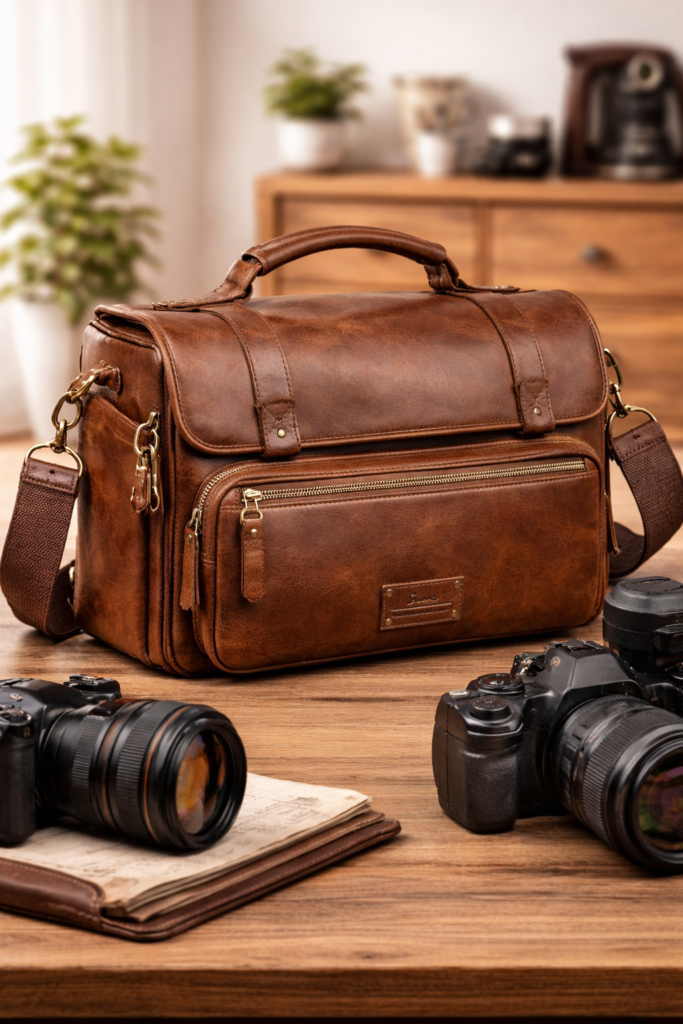
Leather Camera Bag Crossbody – Best Picks for Minimalist Shooters
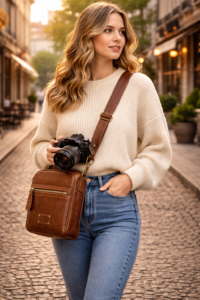
Why a Leather Camera Bag Crossbody Is Perfect for Minimalist Photographers
The best camera bag is the one you actually use. And for minimalist shooters — street photographers, travel documentarians, day-trippers, and anyone who hates lugging gear — a crossbody is often the answer.
Here’s why it works so well. A leather camera bag crossbody sits diagonally across your body, resting at your hip or chest. That means your hands are always free. You’re not constantly putting down a bag to grab your camera. You just reach in, pull out, and shoot. In fast-moving environments — markets, festivals, busy streets — that speed matters enormously.
The leather element adds another layer of practicality. Leather is naturally more scratch-resistant and abrasion-resistant than canvas or nylon. It repels light moisture. And unlike black synthetic bags, a brown or tan leather crossbody doesn’t telegraph “expensive camera gear inside” to every passerby.
According to Wikipedia’s entry on crossbody bags, the crossbody design distributes weight across the torso more evenly than a single-shoulder bag — reducing strain on long shooting days. That’s a real advantage when you’re out for hours.
What to Look for in a Leather Camera Bag Crossbody
Not all crossbody camera bags are built equally. Before you spend your money, check these five things.
1. Strap Quality and Adjustability
The strap is everything on a crossbody bag. It needs to be long enough to sit comfortably across your body at the right height, strong enough to hold the weight of your camera without stretching, and padded enough that it doesn’t dig into your shoulder on long sessions.
Look for a wide, padded strap with a non-slip backing. Metal hardware on the strap clips — not plastic — is a must. A quick-release clasp is a nice bonus for getting in and out of tight spaces fast.
2. Camera Access Speed
A crossbody bag’s biggest selling point is fast access. So test — or read reviews about — how quickly you can open the main compartment and pull out your camera. Top-loading designs with a single flip buckle tend to be fastest. Side-opening designs work well too.
Avoid bags where you need to undo multiple clasps or navigate a complex zipper arrangement just to grab your camera. Every second counts on the street.
3. Interior Padding and Protection
Compact doesn’t mean unprotected. Look for a leather crossbody camera bag with at least 10–15mm of dense foam padding on all sides. The dividers should be adjustable so you can configure the interior around your specific camera and lens.
Some bags also include a fleece-lined top flap that protects the viewfinder and LCD screen when the bag closes. That’s a small detail that makes a big difference over time.
4. Weather Resistance
You won’t always be shooting in perfect conditions. PU leather is naturally more water-resistant than canvas or genuine leather out of the box. If you’re often shooting in rain-prone environments, look for a bag with a PU leather exterior and sealed or water-resistant zippers — or one that includes a rain cover.
5. Size — Compact But Not Cramped
The sweet spot for a minimalist crossbody is a bag that fits your camera body with a lens attached, one or two additional lenses, spare batteries, and memory cards — without leaving you feeling like you’re wearing a grocery bag. Most photographers find that 4–8 liters is the ideal range for a crossbody camera bag.
Best Leather Camera Bag Crossbody Options in 2025
We’ve researched and reviewed the market to find the best crossbody leather camera bags for minimalist shooters. Here are the top three picks — each with a different strength.
1. TULLIO Waterproof Crossbody Camera Bag Best Overall
The TULLIO crossbody is the bag we’d recommend to most minimalist shooters without hesitation. It’s compact, waterproof, and — most importantly — it doesn’t look like a camera bag. In environments where discretion matters, that’s a genuine advantage.
The waterproof PU leather exterior handles light to moderate rain without issue. A rain cover is included in the box, which is genuinely rare at this price point. The interior fits most mirrorless cameras with a lens attached, plus one or two additional lenses and the usual small accessories.
Swing it from your back to your front in a single fluid motion and the main compartment opens wide for fast, unobstructed access. The padded shoulder strap is wide enough to stay comfortable across a full day of shooting. This bag works equally well for street photography, travel, and casual day shoots.
- Rain cover included in the box
- Waterproof PU leather exterior
- Doesn’t look like a camera bag
- Fast, easy one-motion access
- Lightweight — great for all-day carry
- Works as an everyday bag too
- Limited capacity (~5L)
- Not suited for heavy DSLR setups
- No laptop compartment
- Smaller brand — fewer reviews
Best for: Minimalist shooters, street photographers, and travelers who want a slim, waterproof leather crossbody that doesn’t attract unwanted attention.
2. Divvia Waterproof Crossbody Camera Bag (Bronze Hardware) Most Stylish
Filename:
divvia-waterproof-bronze-leather-crossbody-camera-bag.jpgAlt text: “Divvia waterproof leather crossbody camera bag with bronze hardware”
If you want your crossbody camera bag to turn heads for the right reasons, the Divvia bronze hardware edition is the one. Premium SBS metal zippers, elegant bronze hardware accents, and a rich waterproof PU leather exterior come together to create one of the best-looking camera bags at this price point.
It’s designed for photographers who care about aesthetics as much as function. The clean exterior lines hide every trace of camera gear inside, making it an ideal companion for client meetings, travel, and urban shooting sessions where you want to blend in with style.
The interior is configured for mirrorless cameras and small DSLRs, with adjustable padding that you can move around to fit your exact kit. The main compartment opens wide for fast access, and the exterior pocket keeps your phone, cards, and keys separate from your gear.
- Premium SBS metal zippers
- Elegant bronze hardware design
- Waterproof PU leather exterior
- Wide-opening main compartment
- Fits mirrorless + small DSLR
- Sleek exterior — no camera bag look
- Newer brand — fewer user reviews
- Limited carrying capacity
- No rain cover included
- No laptop compartment
Best for: Style-conscious photographers who want a leather crossbody that looks as good as it functions — for city shoots, travel, and everyday carry.
3. Divvia Waterproof Shockproof Mini Sling 4L Best Ultra-Compact
Filename:
divvia-shockproof-mini-sling-leather-crossbody-bag-4l.jpgAlt text: “Divvia 4L shockproof leather mini sling crossbody camera bag”
For the true minimalist — the photographer who shows up with one mirrorless body and a single prime lens — the Divvia 4L mini sling is the ultimate compact option. It’s small enough to forget it’s there, but it’s built to protect your gear seriously.
Both waterproof and shockproof, this bag handles the kinds of bumps and splashes that happen on real-world shooting days. The shockproof foam lining wraps your camera on all sides, while the waterproof PU leather exterior keeps moisture out. Bronze hardware and a clean exterior design keep it looking sharp.
At just 4 liters, this isn’t a bag for extra lenses or accessories. It’s a one-camera bag — and it does that job perfectly. If your shooting philosophy is “one camera, one lens, go,” this is built exactly for you.
- Waterproof AND shockproof protection
- Ultra-compact — perfect for mirrorless
- Elegant bronze hardware finish
- Extremely lightweight daily carry
- Quick single-zip access
- Won’t fit a full-size DSLR
- Only 4L — no room for extra lenses
- No rain cover included
- Very limited accessory storage
Best for: Minimalist mirrorless shooters who want the smallest, lightest, most protective leather crossbody possible.
Side-by-Side Comparison: Leather Camera Bag Crossbody
| Bag | Capacity | Waterproof | Shockproof | Rain Cover | Laptop Slot | Fits DSLR? | Best For |
|---|---|---|---|---|---|---|---|
| TULLIO Crossbody ⭐ | ~5L | ✔ Yes | No | ✔ Yes | No | ✔ Small DSLR | All-round street |
| Divvia Bronze Crossbody | ~6L | ✔ Yes | No | No | No | ✔ Small DSLR | Style + travel |
| Divvia Mini Sling 4L | 4L | ✔ Yes | ✔ Yes | No | No | Mirrorless only | Ultra minimalist |
⭐ Best overall pick | ✔ = Available | No = Not included
Who Is a Leather Crossbody Camera Bag Really For?
A leather camera bag crossbody isn’t for everyone. It’s a deliberate choice that fits a specific type of photographer. Here’s who gets the most out of it.
Street Photographers
Speed and discretion are everything on the street. A crossbody bag gives you both. You can access your camera in seconds without removing the bag, and a leather exterior doesn’t announce “photographer” to every person you’re trying to shoot naturally. The compact size keeps you agile in crowds, alleyways, and tight urban spaces.
Travel Photographers
When you’re navigating airports, markets, temples, and train stations, the last thing you want is a heavy backpack constantly shifting on your back. A leather crossbody keeps your camera within arm’s reach at all times, sits flat against your body for security in crowded places, and takes up almost no space in overhead bins or under-seat storage.
Portrait and Event Photographers on Light Days
Not every job requires your full kit. When you’re doing a quick headshot session, a casual event, or a casual portrait walk, a crossbody lets you carry one body and two lenses in comfort — without the weight and bulk of a full backpack. It signals confidence and intentionality: you came with exactly what you need.
Photographers Who Value Everyday Style
A leather crossbody works as an everyday bag even when you’re not shooting. Remove the padded insert, drop in your wallet, keys, and phone, and it functions perfectly as a city bag. You’ll actually carry your camera more often when it lives in a bag you want to wear regardless of whether you’re shooting.
Camera body with lens attached → main compartment. One spare lens → padded side pocket or interior divider slot. Two spare batteries → front zippered pocket. Two or three memory cards → card wallet in front pocket. Small microfiber cloth → tucked alongside the camera. That’s genuinely everything you need for most shoots — and it all fits in a 5–6L leather crossbody.
Leather Crossbody vs. Leather Backpack – Which Is Right for You?
Both are excellent choices — but they serve very different shooters. Here’s the honest comparison.
A leather camera backpack is the right choice when you carry a lot of gear. Multiple bodies, several lenses, a laptop, a tripod, lighting accessories — if your kit is big, a backpack distributes that weight properly and keeps everything organized. The trade-off is speed and agility. Getting to your camera requires swinging the bag off your back every time.
A leather camera bag crossbody is the right choice when you travel light and value speed. One camera, one or two lenses, and your everyday essentials. Access is instant — no need to put down the bag, no straps to fiddle with. The trade-off is capacity. If you’re a heavy packer, a crossbody will feel limiting fast.
The honest answer is that most photographers benefit from having both. Use the backpack for full production days. Use the crossbody for personal projects, travel, and casual shooting. If you can only have one, think hard about the kind of shooting you do most often — and buy accordingly.
How to Wear and Use a Leather Camera Bag Crossbody Correctly
Getting the fit right makes a big difference in both comfort and speed. Here’s how to get the most out of your crossbody camera bag.
- Set the strap length before you go out. The bag should sit just above your hip when worn across your back, and swing comfortably to your front chest when you’re ready to shoot. Too long and it swings wildly. Too short and the swing motion feels cramped.
- Wear it across your dominant-hand side. If you’re right-handed, wear the strap over your left shoulder so the bag rests on your right hip. That way, your dominant hand reaches the zipper and camera naturally.
- Keep the main compartment zipper at the top. Rotate the bag to your front, open from the top down, and your camera is immediately accessible. Practicing this motion a few times before you head out makes it feel completely natural in the field.
- Use the exterior pocket for non-camera items. Keep your phone, cards, and keys in the exterior pocket so you’re never digging past your camera to find them. Separation keeps things fast and organized.
- In crowded areas, wear it in front. In busy markets, transport hubs, or any environment with pickpocket risk, swing the bag to your front chest. You’ll still have easy access and your gear is always in your line of sight.
Caring for Your Leather Crossbody Camera Bag
A leather bag rewards good maintenance with years — sometimes decades — of reliable use. Here’s the simple care routine that keeps your bag looking sharp.
- Wipe it down after shoots. A dry cloth removes dust, grime, and light moisture before it settles into the leather. Takes ten seconds and makes a real difference over time.
- Condition genuine leather twice a year. A quality leather conditioner prevents drying and cracking. Apply a thin coat, let it absorb, and buff off the excess. For PU leather, this step isn’t needed.
- Treat the zippers. A tiny drop of zipper lubricant on your metal zippers every few months keeps them gliding smoothly and prevents corrosion on the hardware.
- Store it stuffed and upright. When the bag isn’t in use, stuff it lightly with tissue paper or a small cloth to help it hold its shape. Store it in a cool, dry place away from direct sunlight.
- Handle rain carefully. Even waterproof PU leather bags aren’t designed for submersion. In heavy rain, use the rain cover if you have one — or tuck the bag under your jacket. If the leather gets soaked, let it air dry naturally. Never use heat.
📎 Also Read on Our Site:
Frequently Asked Questions: Leather Camera Bag Crossbody
Q: Can a leather crossbody camera bag hold a full-frame DSLR?
It depends on the bag. Most leather crossbody camera bags are designed for mirrorless cameras and small to mid-size DSLRs. Full-frame DSLR bodies with large lenses attached can be tight or too bulky for a compact crossbody. If you shoot full-frame DSLR, look for a bag specifically rated for your camera body — or consider a leather backpack for better fit.
Q: Is a leather crossbody camera bag good for travel?
Absolutely. A leather crossbody is one of the best travel camera bags you can own. It’s compact enough to fit under airplane seats, sits flat against your body in crowds for better security, and provides fast access to your camera without removing the bag. Just make sure the leather is waterproof or water-resistant for outdoor travel use.
Q: How much gear can I realistically fit in a crossbody camera bag?
In a typical 5–6L leather crossbody, you can comfortably fit one camera body with a lens mounted, one or two additional lenses, spare batteries, a few memory cards, and small accessories. It’s a one-camera setup — deliberately so. If you regularly need more than that, a crossbody might not be your primary bag, but it makes an excellent secondary bag for lighter shooting days.
Q: What’s the difference between a sling bag and a crossbody camera bag?
The terms are often used interchangeably, but there’s a small distinction. A sling bag typically has a single strap that goes over one shoulder and is worn on your back — swinging to your front for access. A crossbody bag hangs at your hip or chest and is worn diagonally across your torso. Both work well for camera carry. The choice comes down to personal preference and the size of the bag.
Q: Are leather camera crossbody bags safe in crowded places?
Yes — more so than backpacks, actually. Because a crossbody sits at your side or front, it’s always visible and accessible to you. In very crowded environments, swing the bag to your front chest. The main compartment zipper faces you, making it much harder for a pickpocket to access. That said, always use a bag with a secure zipper — not a buckle or snap closure — in high-risk environments.
Final Verdict: The Leather Camera Bag Crossbody Is Built for the Way You Actually Shoot
The best photography kit is the one you use consistently. And for minimalist shooters who want to move fast, shoot instinctively, and carry their camera everywhere without being weighed down, a leather camera bag crossbody is the single best tool for the job.
For the most complete all-round pick, the TULLIO Crossbody is hard to beat — waterproof, rain cover included, lightweight, and understated. If you want something with more visual impact and premium hardware, the Divvia Bronze Crossbody delivers exceptional style without sacrificing protection. And for the true minimalists who carry one camera and one lens, the Divvia 4L Mini Sling is the most compact, most protected option on the list.
Whichever you choose, you’re investing in a bag that frees you up to do what you actually came to do — shoot.